art.wikisort.org - Artist
Dmitri Ivanovich Yermakov (Russian: Дмитрий Иванович Ермаков) (1846 – November 10, 1916) was a Russian Empire photographer known for his series of the Caucasian photographs.
Dmitri Ivanovich Yermakov | |
|---|---|
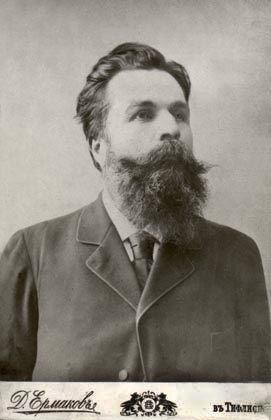 Dmitri Ivanovich Yermakov, 1885 | |
| Born | Dmitri Ivanovich Caribaggio 1846 Tiflis, Russian Empire |
| Died | 10 November 1916 (aged 69–70) |
| Nationality | Russian |
| Known for | Photographer |
| Movement | Orientalist |
Life and career

Yermakov was born in Tiflis in 1846, the son of the Italian architect Luigi Caribaggio and a Georgian mother of Austrian descent. She remarried the Russian Ermakov whose surname her son Dmitry took. Trained as a military topographer, he took part in the Russo-Turkish War (1877–1878).
As an adult, he operated photographic businesses in Tiflis. He traveled extensively as far as Iran and participated in several archaeological expeditions in the Caucasus, leaving a series of unique photographs. These photographs document the lifestyles, customs and costumes of Russian people in the late 19th-century forming an important ethnographic record of the region and its inhabitants. Thousands of his negatives are now kept at Georgian museums.[1]
Work
 Armenian noble woman from Tiflis, date unknown
 Girls and Aged Woman Djeg Settlement, 1880
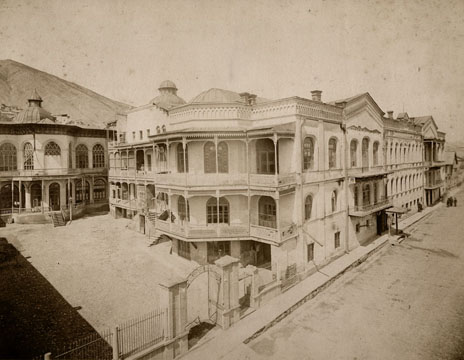
 The House of Arshakuni, 1884-86
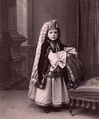 Princess Lazarev in Tatar costume, date unknown
 A Jew with nuts, date unknown
 Georgians with national clothes, date unknown
 Kurd in the Russian service,
 Shah Abbas mosque in Ganja, early 1900s
 Rug Deal at the Tiflis Bazaar, date unknown
 The Oriental Bath, 1880




See also

- List of Orientalist artists
- List of artistic works with Orientalist influences
- Orientalism
References
- John Hannavy (2008), Encyclopedia of Nineteenth-century Photography, pp. 494-5. CRC Press, ISBN 0-415-97235-3
External links

Authority control | |
|---|---|
| General | |
| National libraries | |
| Art research institutes | |
| Other |
|

 | This Russian artist-related article is a stub. You can help Wikipedia by expanding it. |
На других языках
- [en] Dmitri Yermakov
[fr] Dimitri Ermakov
Dimitri Ivanovitch Ermakov[1] (en russe : Дмитрий Иванович Ермаков), né en 1845[2] à Tiflis (aujourd'hui Tbilissi) dans l'Empire russe et mort dans la même ville en 1916, possiblement le 10 novembre, est un photographe russe, notamment connu pour ses photographies des paysages, monuments et populations du Caucase.[ru] Ермаков, Дмитрий Иванович
Ермаков Дмитрий Иванович (1845 (1845)—1916) — русский фотограф, ориенталист, этнограф.Другой контент может иметь иную лицензию. Перед использованием материалов сайта WikiSort.org внимательно изучите правила лицензирования конкретных элементов наполнения сайта.
WikiSort.org - проект по пересортировке и дополнению контента Википедии