art.wikisort.org - Sculpture
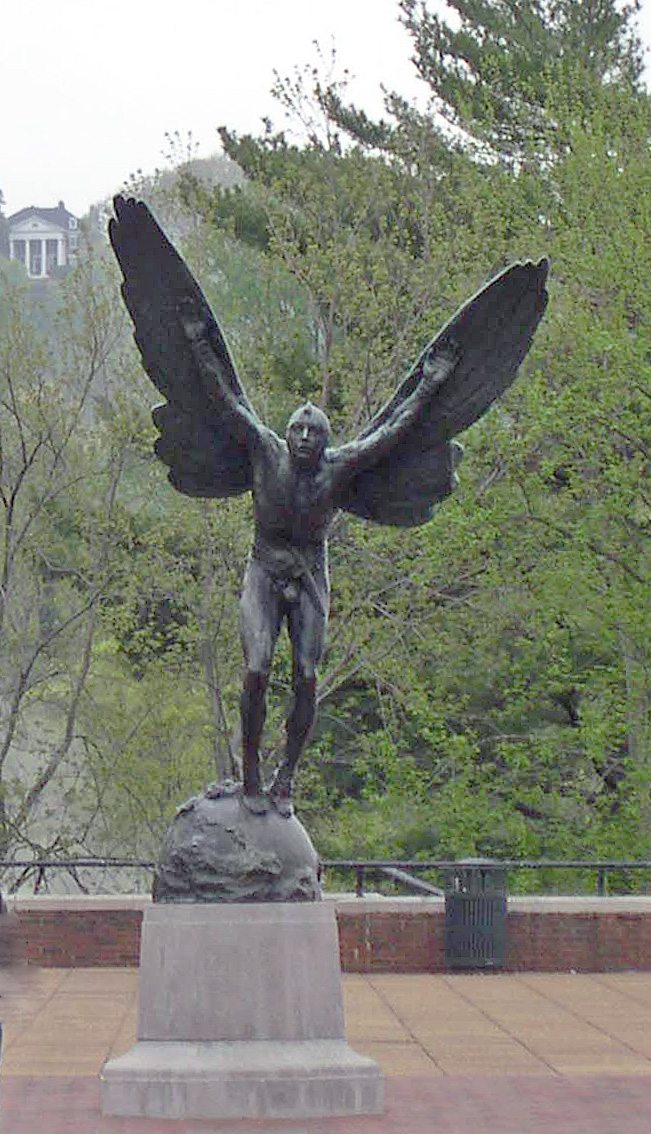
The Aviator is a historical sculpture located on the University of Virginia campus near Charlottesville, Albemarle County, Virginia.
| The Aviator | |
|---|---|
 | |
| Artist | Gutzon Borglum |
| Year | 1918 |
| Type | Bronze |
| Dimensions | 4,400 cm × 3,400 cm (144 ft × 112 ft) |
| Location | Charlottesville, Virginia |
| Owner | University of Virginia |
U.S. National Register of Historic Places | |
Virginia Landmarks Register | |
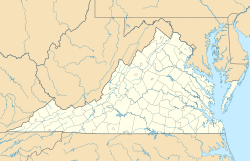   | |
| Location | Monument Square, bounded by University and Jefferson Park Aves. and the railroad tracks, Charlottesville, Virginia |
| Coordinates | 38°2′18″N 78°30′21″W |
| Area | less than one acre |
| Built | 1919 |
| Architect | Borglum, Gutzon |
| Architectural style | Late 19th And 20th Century Revivals |
| NRHP reference No. | 06000758[1] |
| VLR No. | 002-5073 |
| Significant dates | |
| Added to NRHP | November 9, 2006 |
| Designated VLR | June 8, 2006[2] |
History
The sculpture is a bronze statue commissioned in honor of University alumnus, James Rogers McConnell’s heroism and courage in World War I, as a member of the Lafayette Escadrille.
The Aviator was designed by Gutzon Borglum and dedicated in 1919. The sculpture measures 12 feet high and 8 feet, 6 inches wide.[3]
It is located in front of Clemons Library on the grounds of the University of Virginia. Due to the library's abundant 24-hour study space available for students, The Aviator is a fixture in everyday life at the University.[4]
It is an athletic male nude with his feet placed shoulder width apart, knees slightly bent and arms outstretched supporting a pair of wings.[5] The blade/knife; dirk or possible dagger/stiletto the figure has in his sheath is a recognized symbol of masculinity.[6][7]
It was added to the National Register of Historic Places in 2006.[1]
Gallery
 The Aviator, April 2013
 The Aviator, December 2005
 The Seven Society inscription
 Inscription


References
- "National Register Information System – (#06000758)". National Register of Historic Places. National Park Service. November 2, 2013.
- "Virginia Landmarks Register - The Aviator". Virginia Department of Historic Resources. Archived from the original on 2021-05-11. Retrieved 2021-05-08.
- "The Aviator, (sculpture)". Inventory of American Sculpture. Smithsonian Institution. Archived from the original on 11 October 2014. Retrieved 29 May 2013.
- "UVA Library". www.library.virginia.edu. Archived from the original on 2016-04-22. Retrieved 2021-07-17.
- Susan Smead and Taryn Harrison (April 2006). "National Register of Historic Places Inventory/Nomination: The Aviator" (PDF). Archived (PDF) from the original on 2021-07-05. Retrieved 2021-08-05. and Accompanying photo Archived 2021-07-05 at the Wayback Machine
- "Ornate Yemeni Knives Mark Status, Masculinity". NPR.org. Archived from the original on 2017-02-27. Retrieved 2018-04-04.
- Schotten, C. (2009-07-20). Nietzsche's Revolution: Décadence, Politics, and Sexuality. ISBN 9780230623224. Archived from the original on 2021-08-05. Retrieved 2020-12-04.

U.S. National Register of Historic Places in Virginia | ||
|---|---|---|
| Lists by county |
|   |
| Lists by city |
| |
| Other lists |
| |
| ||
Другой контент может иметь иную лицензию. Перед использованием материалов сайта WikiSort.org внимательно изучите правила лицензирования конкретных элементов наполнения сайта.
WikiSort.org - проект по пересортировке и дополнению контента Википедии